Telehealth Therapy in Seattle: Online Counseling That Fits Your Life
Discover how telehealth therapy works, its benefits, privacy considerations, and how to find online counseling in Seattle with Havencrest Wellness & Counseling.
12 min read

Article
The research says outcomes are broadly comparable. The practical differences are what should decide it.
Amara Okafor· 9 min read
People often ask which one works better, expecting a clear answer. For most common presentations, outcomes from video therapy are broadly comparable to in-person work. So the more useful question is not which is more effective, but which you will actually attend.
Choosing to begin therapy is an important step toward supporting your mental and emotional well-being. But once you've decided to seek counseling, another question often comes up:
Today, many people have access to both options. Telehealth can make therapy more convenient and accessible, while in-person counseling can provide a dedicated environment away from the distractions of home.
There isn't one format that is right for everyone. The best choice depends on your preferences, schedule, privacy, technology access, therapeutic needs, and what helps you feel most comfortable engaging in treatment.
At Havencrest Wellness & Counseling, we offer flexible mental health care designed around the individual. Understanding the differences between telehealth and in-person therapy can help you decide which approach may fit your life.
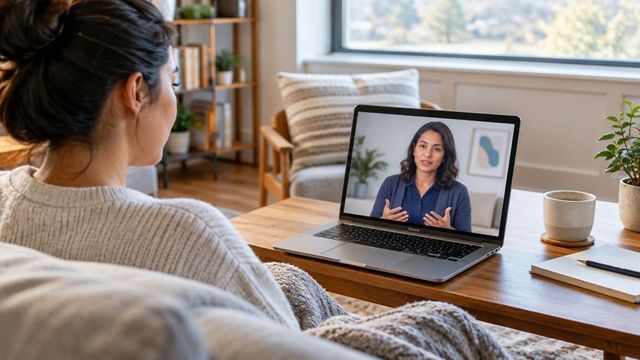
Telehealth therapy, sometimes called online therapy or virtual counseling, allows you to meet with your therapist using secure telecommunications technology rather than visiting an office.
Depending on the provider and service, telehealth may be conducted through a video appointment and, in some circumstances, other forms of telehealth communication.
Washington State permits healthcare practitioners to provide telehealth when the service falls within their scope of practice and complies with applicable Washington and federal requirements. Washington State Department of Health
For many people, the biggest advantage is simple: you don't have to travel to an office to attend your therapy appointment.
You may be able to attend a session from a private room at home or another appropriate location where you can participate confidentially.
In-person therapy involves meeting your therapist at a counseling office for your scheduled appointment.
For some people, physically entering a professional therapeutic environment creates a clear separation between therapy and the rest of their day.
Instead of opening a laptop at home, you have a dedicated space where the focus is on your mental health and the conversation with your therapist.
In-person therapy may be particularly appealing if you:
Prefer face-to-face interaction
Find it easier to concentrate outside your home
Want a physical separation between therapy and everyday responsibilities
Have a private, comfortable counseling environment available to you
Prefer traditional office-based healthcare experiences
Both formats can provide access to professional counseling, but the experience can be different.
Consideration | Telehealth Therapy | In-Person Therapy |
|---|---|---|
Travel | No commute required | Requires travel to the office |
Convenience | Can fit more easily into busy schedules | Requires additional travel time |
Environment | You participate from your chosen location | Dedicated therapeutic setting |
Privacy | Requires a private space on your end | Privacy is provided within the counseling environment |
Technology | Requires an appropriate device and connection | No internet connection needed during the session |
Face-to-face experience | Video-based interaction | Physical office setting |
Accessibility | May be useful for people with transportation or mobility barriers | May be preferred by people who want an office environment |
Neither option is automatically better. The important question is:
Which environment makes it easier for you to participate honestly, consistently, and comfortably in therapy?
One of the most obvious advantages of telehealth is convenience.
You don't necessarily have to drive across town, find parking, or spend additional time commuting before and after your appointment.
For someone balancing work, school, parenting, or other responsibilities, eliminating the commute can make therapy easier to maintain.
Telehealth may be especially helpful for people who live farther from their preferred provider or have difficulty traveling.
Washington's Department of Health recognizes telehealth as a way healthcare services can be delivered through telecommunications technology when appropriate under applicable laws and professional standards. Washington State Department of Health
For some people, the ability to attend therapy without leaving their home or workplace can make it easier to maintain regular appointments.
Consistency matters because therapy is generally most useful when you can participate regularly and engage meaningfully in the process.
Some people feel more comfortable talking about difficult experiences from a familiar environment.
Being in your own space may help you feel relaxed and more at ease during sessions.
However, it's important to choose a location where you can speak privately and without unnecessary interruptions.
For some people, therapy feels different when they physically enter a counseling office.
The setting can create a psychological boundary between everyday responsibilities and the therapeutic process.
In-person therapy eliminates some of the technical considerations associated with virtual sessions, such as internet connectivity, device issues, audio problems, or finding an appropriate private location.
Some people simply feel more comfortable communicating in person.
Body language, facial expressions, and the overall experience of sitting with another person may feel more natural than communicating through a screen.
If your home is busy, crowded, or filled with responsibilities, attending therapy somewhere else may make it easier to focus.
For example, someone who works from home may find that leaving the house for therapy creates a valuable transition between work and personal life.
This is one of the most common questions people have.
The answer isn't simply that one format works for everyone.
The usefulness of therapy depends on several factors, including the type of concern being addressed, the therapeutic approach, the relationship between you and your therapist, your ability to participate openly, and whether the format is appropriate for your circumstances.
The most important consideration is finding a qualified mental health professional and a treatment format that allows you to participate consistently and safely.
Your therapist can also help determine whether telehealth is appropriate for your particular situation.
Consider these questions before scheduling your first appointment.
If you're attending therapy from home, can you speak openly without family members, roommates, children, or coworkers overhearing your conversation?
If privacy is difficult to achieve, an in-person appointment may be more comfortable.
Telehealth generally requires an appropriate device and a reliable connection.
If technical problems regularly interfere with your ability to communicate, in-person therapy may be a better fit.
If transportation, distance, mobility, work schedules, or other responsibilities make traveling difficult, telehealth may provide greater accessibility.
This question can be surprisingly important.
Some people feel more comfortable talking from their own home. Others find that being in a professional office makes it easier to focus and engage.
Think about which environment would allow you to be most present during your sessions.
Your surroundings matter.
If you're likely to answer work emails, care for children, do household tasks, or become distracted during a virtual appointment, an office visit may provide the structure you need.
In some cases, therapy doesn't have to be an either-or decision.
Depending on the provider, your treatment needs, scheduling, and applicable requirements, you may be able to use different formats at different times.
For example, you might prefer in-person sessions when you're beginning therapy and later choose telehealth when scheduling becomes difficult.
Discuss your preferences with your therapist so you can determine what approach is appropriate for your care.
Privacy is an important part of any therapy experience.
If you're attending a virtual session, choose a private location and use a device and connection that allow you to participate confidentially.
Washington's Department of Health notes that telehealth services must comply with applicable professional standards and federal and state requirements. Washington State Department of Health
Your therapist or counseling practice should also explain how telehealth appointments work and what you can expect before your first session.
Starting therapy doesn't have to mean rearranging your entire life.
For some people, telehealth makes counseling more accessible and convenient. For others, stepping into a therapist's office creates the focus and separation they need.
The right choice is ultimately the one that supports consistent participation, privacy, comfort, and meaningful engagement in therapy.
If you're unsure which option to choose, you don't have to figure it out alone. A mental health professional can discuss your needs and help you determine what type of appointment may be appropriate.
Havencrest Wellness & Counseling provides mental health counseling for individuals and families, with services designed to make accessing support easier and more comfortable.
Whether you're looking for support with anxiety, depression, trauma, stress, relationship concerns, or other mental health challenges, taking the first step can begin with a conversation.
If you're considering therapy and aren't sure whether telehealth or in-person counseling is right for you, contact Havencrest Wellness & Counseling to explore your options.
If you are unsure, start in person and switch if it is not practical. Changing format later is straightforward and does not mean starting again.
Yes. Washington allows healthcare practitioners to provide telehealth services when the services are within their scope of practice and comply with applicable professional and legal requirements.
Yes. Through telehealth, we can provide services to eligible clients located anywhere in Washington State, subject to licensing and clinical appropriateness.
Telehealth therapy should be conducted in a manner consistent with applicable privacy and confidentiality requirements. Clients should also participate from a private location where they can speak without being overheard.
There is no single format that is best for everyone. The appropriate option depends on factors such as your treatment needs, preferences, privacy, schedule, access to technology, and ability to participate effectively.
Telehealth may allow you to attend therapy from home when the provider offers the service and the location and circumstances meet applicable requirements. You should have a private environment where you can participate comfortably.
Consider the therapist's credentials, areas of experience, treatment approach, availability, location or telehealth options, insurance or payment arrangements, and whether you feel comfortable communicating with them.
Our team will help you find the clinician and service that fit what you are looking for.
Request appointmentDiscover how telehealth therapy works, its benefits, privacy considerations, and how to find online counseling in Seattle with Havencrest Wellness & Counseling.
CBT ranks best overall for life transitions in 2026, with family, trauma-focused, and short-term options for specific situations. Compare all six approaches.
Therapy in Washington costs $100-250 self-pay or $20-50 with insurance in 2026. See the full cost breakdown by payment type and provider before you book.