
Best therapy approaches for life transitions in 2026
CBT ranks best overall for life transitions in 2026, with family, trauma-focused, and short-term options for specific situations. Compare all six approaches.
Content Team 8 min read
Article
Discover how telehealth therapy works, its benefits, privacy considerations, and how to find online counseling in Seattle with Havencrest Wellness & Counseling.
· 12 min read
If you're looking for telehealth therapy in Seattle, you may be wondering whether online counseling is right for you, how virtual therapy works, whether it is private, and how to find a therapist who meets your needs.
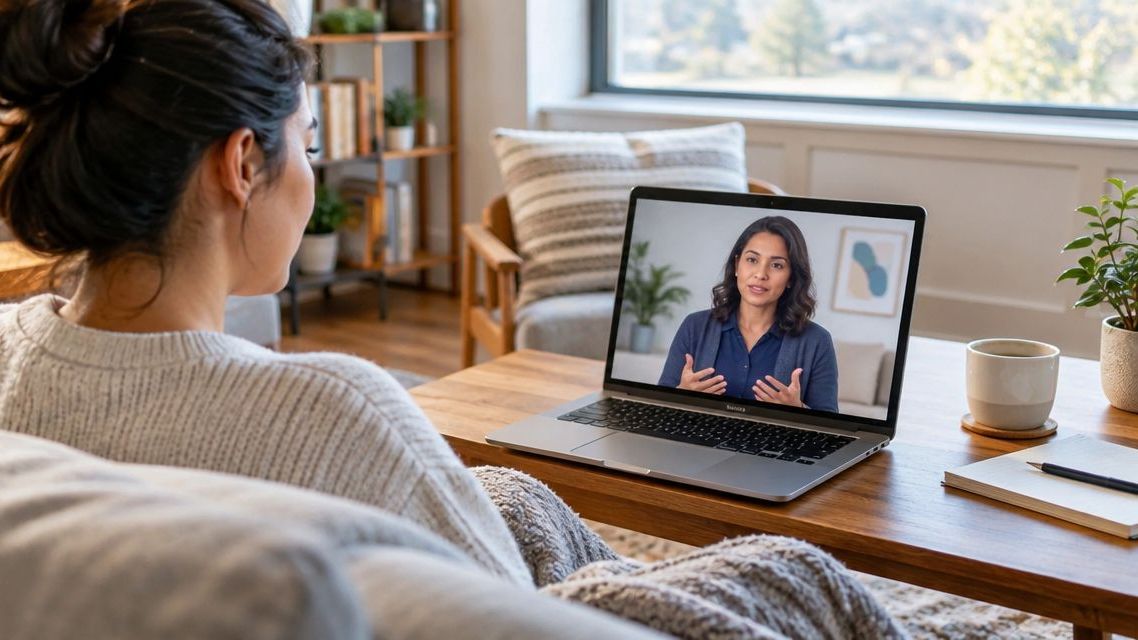
For many people, telehealth therapy offers a convenient way to access mental health support without traveling to a therapist's office. You can connect with a qualified mental health professional from an appropriate private location, making therapy easier to fit around work, family, school, and everyday responsibilities.
At Havencrest Wellness & Counseling, we believe mental health care should be accessible, compassionate, and centered around the individual. Telehealth can provide another way for people in Seattle and throughout Washington to connect with professional counseling.
Whether you're experiencing anxiety, depression, trauma, stress, relationship concerns, or a major life transition, understanding your therapy options can help you take the next step with greater confidence.
Telehealth therapy is mental health counseling provided remotely using telecommunications technology, most commonly through secure video appointments.
Instead of traveling to a counseling office, you meet with your therapist virtually from an appropriate private location.
A telehealth therapy appointment can look much like an in-person counseling session. You and your therapist talk, explore your concerns, identify patterns, develop coping strategies, and work toward goals that are relevant to your individual circumstances.
The primary difference is the setting.
Rather than sitting in a therapist's office, you may participate from home or another private location.
Washington State recognizes telehealth as a method of delivering healthcare services when applicable legal, professional, privacy, and clinical requirements are met. Your provider can explain how telehealth works for your particular service and circumstances.
Life in the Seattle area can be busy.
Between work, commuting, family responsibilities, school, appointments, and personal obligations, finding time for mental health care can sometimes feel like another task on an already crowded schedule.
Telehealth therapy can remove one of the practical barriers: traveling to and from an appointment.
Instead of spending additional time driving, parking, or traveling across the Seattle area, you may be able to attend your therapy appointment from a private location that works for you.
For some people, that convenience makes it easier to attend therapy consistently.
And consistency can matter.
When therapy becomes something you can realistically incorporate into your routine, it may be easier to maintain regular appointments and continue working toward your goals.
One of the biggest benefits of online therapy is convenience.
You don't necessarily have to leave work, drive to an office, find parking, attend your appointment, and then make the trip home.
Instead, you may be able to connect with your therapist from a private location.
This can be particularly useful for people with demanding work schedules or family responsibilities.
Seattle-area traffic and transportation challenges can add significant time to an appointment.
Telehealth eliminates the commute associated with an office visit.
That can make a 50-minute therapy session feel much more manageable when you don't need to add additional travel time.
Telehealth can make it easier to incorporate counseling into your existing routine.
For example, depending on your provider's availability and your circumstances, you might be able to schedule an appointment before work, during a suitable break, or after your workday without needing to travel to an office.
Your therapist will help determine what scheduling options are available.
Some people feel more comfortable talking about personal or emotional issues from a familiar environment.
Being in your own space may help you feel relaxed and comfortable during your appointment.
However, comfort should not come at the expense of privacy.
If you're participating from home, make sure you have a location where you can speak openly without being overheard.
Getting to an appointment isn't equally easy for everyone.
Transportation limitations, mobility concerns, work schedules, caregiving responsibilities, or distance can make traditional appointments difficult.
Telehealth may reduce some of these logistical barriers.
Telehealth may be appropriate for a wide range of mental health concerns, depending on the client, treatment approach, provider, and clinical circumstances.
At Havencrest Wellness & Counseling, counseling may address concerns such as:
Anxiety
Depression
Stress
Trauma-related concerns
Life transitions
Grief and loss
Relationship challenges
Emotional burnout
Self-esteem
Coping skills
Behavioral and emotional concerns
For example, if anxiety is interfering with work, relationships, sleep, or everyday activities, therapy may provide a structured environment to explore what is contributing to those symptoms and develop healthier ways of coping.
You can learn more about our anxiety therapy services if anxiety is one of the reasons you're considering counseling.
Different concerns may require different therapeutic approaches. Your therapist can discuss whether telehealth is appropriate for your specific needs.
If you're searching for telehealth therapy in Seattle, you may also be deciding between online and in-person counseling. Read more on our article Telehealth and in-person therapy: how to choose.
Neither format is automatically right for everyone.
The better question is:
Which environment will make it easier for you to participate consistently, privately, and meaningfully in therapy?
Prefer online appointments
Have a private location available
Want to avoid commuting
Have reliable internet access
Have a demanding schedule
Have transportation challenges
Feel comfortable communicating through video
Prefer face-to-face interaction
Find it easier to concentrate outside your home
Don't have a private place for virtual sessions
Prefer a dedicated counseling environment
Have frequent technology problems
Want a clear physical separation between therapy and home
There may also be situations where a client prefers different formats at different times, depending on availability and clinical appropriateness.
If you're unsure, discuss your preferences with your therapist.
Privacy is an important consideration when participating in online therapy.
Your mental health provider should use appropriate technology and follow applicable privacy and confidentiality requirements.
Clients also have an important role in protecting their own privacy.
Before your appointment, consider:
Where you will participate
Whether anyone can hear your conversation
Whether your device is secure
Whether notifications should be turned off
Whether headphones would provide additional privacy
Whether you can participate without interruptions
A bedroom, home office, or other private room may work well for some people.
If your home is busy or you don't have a private space, tell your therapist. Together, you may be able to identify another appropriate arrangement.
If you've never participated in telehealth counseling before, the process may feel unfamiliar.
Generally, the process looks something like this:
Look for a mental health professional whose credentials, experience, specialties, availability, and treatment approach align with your needs.
Once you've identified a provider, schedule an appointment and ask any questions you have about telehealth.
Find a quiet and private location where you can speak openly.
Make sure your device is charged and that your internet connection is working.
Use the instructions provided by your therapist or practice to connect to your virtual session.
Your therapist will guide the conversation and work with you to understand your concerns and identify appropriate treatment goals.
A little preparation can make your virtual appointment more comfortable.
Choose a location where you won't be interrupted or overheard.
Check your internet connection, microphone, and camera before your appointment.
Turn off unnecessary notifications and put other devices aside.
Having water available can be helpful during longer conversations.
One advantage of telehealth is not needing to commute. But that doesn't mean you should rush directly from a stressful work meeting into therapy.
If possible, give yourself a few minutes to slow down and prepare mentally.
Finding an online therapist isn't simply about choosing the first provider who appears in search results.
Consider several factors.
Make sure the therapist is appropriately licensed or otherwise qualified to provide the services you're seeking.
Look for experience with the concerns you want to address.
For example, if you're specifically looking for help with anxiety, depression, trauma, or relationship concerns, ask about the therapist's experience working with those issues.
Different therapists use different approaches.
You may want to ask how the therapist typically works with clients and what you can expect during sessions.
A therapist may be an excellent fit but not have appointment times that work with your schedule.
Consistency matters, so consider whether you can realistically attend appointments at the available times.
Ask about accepted insurance plans, copays, deductibles, self-pay rates, and other costs before beginning treatment.
Perhaps most importantly, consider whether you feel comfortable communicating with the therapist.
Therapy often involves discussing personal experiences, emotions, relationships, and challenges. Feeling respected and heard is an important part of the process.
People often ask whether online therapy works as well as in-person therapy.
There isn't one answer that applies to every person, every condition, or every treatment.
Research has found that certain forms of psychotherapy can be delivered effectively through telehealth, but the suitability of virtual treatment depends on factors including the type of therapy, the client's circumstances, clinical needs, and the provider's judgment.
The therapeutic relationship, consistency, participation, and appropriate treatment planning all matter.
If a therapist believes a particular service or situation is not appropriate for telehealth, they can discuss other options with you.
Telehealth may be particularly convenient for people who:
Work remotely
Have busy schedules
Have family or caregiving responsibilities
Have transportation difficulties
Live farther from their preferred provider
Prefer participating from home
Want to reduce travel time
Have a private space for appointments
However, telehealth isn't automatically appropriate for every situation.
If you're experiencing a mental health crisis or immediate safety concern, routine telehealth scheduling may not be the appropriate level of support. Seek immediate assistance through emergency or crisis resources when necessary.
In many circumstances, clients can participate in telehealth sessions from home.
However, the provider must be able to deliver services appropriately based on the client's location, the provider's authorization and licensure, the type of service, and applicable requirements.
Your provider can explain where you may participate and what is required before your first appointment.
The most important practical consideration for you is privacy.
Choose a location where you can speak freely and where other people cannot unintentionally hear your conversation.
Telehealth isn't necessarily limited to clients physically located in Seattle.
Depending on the provider, licensure, service, and applicable requirements, telehealth may be available to clients in other Washington communities as well.
This can make virtual counseling a useful option for people who live outside Seattle but want access to a particular therapist or behavioral health practice.
If you're located elsewhere in Washington, ask the provider whether telehealth services are available in your area.
If you're contacting a therapist for the first time, consider asking:
Do you offer telehealth therapy?
Are you licensed to provide services where I am located?
What types of concerns do you specialize in?
Do you accept my insurance?
What are the costs if I am paying privately?
What technology do I need?
How are virtual sessions conducted?
What happens if my internet connection fails?
Can I switch between telehealth and in-person appointments?
What should I do if I need urgent mental health support?
Asking these questions can help you understand whether a provider is a practical and appropriate fit.
At Havencrest Wellness & Counseling, we recognize that reaching out for therapy can be difficult.
Our goal is to create a supportive environment where clients can discuss their concerns, understand their experiences, develop practical coping strategies, and work toward meaningful goals.
We provide mental health counseling for concerns including anxiety, depression, trauma, stress, and life transitions, among others.
If you're searching for telehealth therapy in Seattle, virtual counseling may provide a convenient way to begin that process.
You don't have to wait until everything feels overwhelming before asking for help.
Finding the right therapist is a personal decision.
For some people, telehealth provides the flexibility they need to make therapy part of their lives. For others, in-person counseling may feel more natural. What matters is finding an approach that allows you to participate consistently, comfortably, and privately.
If you're looking for telehealth therapy in Seattle, Havencrest Wellness & Counseling can help you explore your counseling options.
Whether you're dealing with anxiety, depression, trauma, stress, relationship challenges, or a major life transition, taking the first step can create an opportunity for meaningful support.
Contact Havencrest Wellness & Counseling to learn more about telehealth therapy and available counseling options.
Telehealth therapy in Seattle is mental health counseling delivered remotely using telecommunications technology, typically through secure video appointments. It allows eligible clients to participate in therapy without traveling to a counseling office.
Yes, telehealth may allow you to participate in therapy from home when the service is appropriate and the provider can legally and clinically provide care to you in your location. A private environment is important.
Telehealth may be an appropriate way to receive counseling for anxiety for some people. Whether it is appropriate depends on the individual's circumstances, clinical needs, treatment approach, and provider's judgment.
Telehealth therapy should be conducted in a manner consistent with applicable privacy and confidentiality requirements. Clients should also participate from a private location where they can speak without being overheard.
Telehealth counseling may be appropriate for some people experiencing depression. A qualified mental health professional can evaluate your needs and discuss whether virtual counseling is a suitable option.
The cost of telehealth therapy varies by provider, insurance plan, type of service, and individual circumstances. Ask your provider about insurance participation, copays, deductibles, and self-pay rates before beginning treatment.
Many insurance plans provide coverage for certain telehealth mental health services, but coverage varies. Contactus or your insurance plan to confirm eligibility, benefits, and expected out-of-pocket costs.
Depending on the provider, availability, clinical circumstances, and applicable requirements, you may be able to use both telehealth and in-person services. Ask your therapist what options are available.
Search for a qualified mental health provider offering telehealth services in Washington. Compare credentials, specialties, availability, treatment approaches, insurance options, and whether you feel comfortable with the therapist.
Yes. Telehealth availability depends on the provider's licensure, the client's location, the type of service, and applicable requirements. If you are in Washington State, Havencrest will serve you .
You don't have to figure everything out before reaching out.
If you're considering telehealth therapy in Seattle, Havencrest Wellness & Counseling can help you understand your options and determine what type of counseling may be appropriate for your needs.
Explore your therapy options and take the next step toward support with Havencrest Wellness & Counseling.
Our team will help you find the clinician and service that fit what you are looking for.
Request appointmentCBT ranks best overall for life transitions in 2026, with family, trauma-focused, and short-term options for specific situations. Compare all six approaches.
Therapy in Washington costs $100-250 self-pay or $20-50 with insurance in 2026. See the full cost breakdown by payment type and provider before you book.
You don’t have to know the perfect approach or find a flawless match before you begin. A few practical questions can help you narrow your options and start a conversation with more confidence. Gather information about the therapist’s experience, approach, and communication style, then consider whether they seem suitable for you.